
The findings stand in sharp contrast to earlier declarations from Washington that Iran’s missile capabilities had been effectively destroyed.
By United with Israel Staff
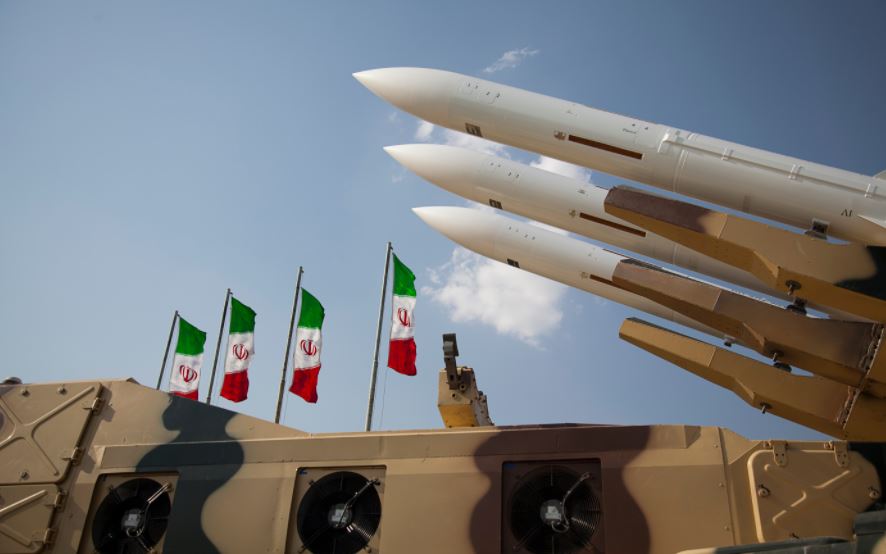
Iran retains an estimated 1,500 to 2,500 ballistic missiles despite months of intensive American and Israeli military operations targeting its weapons infrastructure, according to a report published Sunday by The Wall Street Journal.
Citing US intelligence assessments, the report indicates that Tehran has preserved substantial missile capabilities and is actively rebuilding its arsenal using components stockpiled before the war.
Although American and Israeli strikes severely damaged Iranian missile production facilities, Tehran has resumed manufacturing ballistic missiles, albeit at a slower pace than before the conflict.
The intelligence assessment carries a low level of confidence because of uncertainty surrounding the number of operational missiles, weapons held in storage and missiles that can be recovered from damaged underground facilities.
Nevertheless, US officials believe Iran retains enough firepower to threaten American military installations and allies throughout the Middle East if large-scale hostilities resume.
Israeli military officials have reached similar conclusions, estimating that Iran still possesses more than 1,500 ballistic missiles.
A separate Bloomberg report last week cited Western intelligence estimates that Iran is producing approximately 50 ballistic missiles per month, roughly half its prewar production rate.
That assessment placed Iran’s remaining arsenal at no fewer than 1,700 missiles, despite Tehran having launched more than 2,200 since the joint US-Israeli offensive began on February 28.
Simone Ledeen, a former senior Pentagon official during Trump’s first administration, told the Journal that even the lower estimate suggests Iran has restored more than half its estimated prewar missile arsenal.
The findings stand in sharp contrast to earlier declarations from Washington that Iran’s missile capabilities had been effectively destroyed.
In April, the White House announced that American forces had struck more than 450 ballistic missile targets and approximately 800 drone targets, declaring that Iran’s missile arsenal and production capacity had been “razed.”
However, subsequent intelligence assessments have continued to identify significant Iranian missile and drone capabilities.
According to the Journal, Iran has also improved its ability to target American military bases, radar systems and early-warning installations through coordinated ballistic missile and drone attacks.
The US has reportedly relocated several military assets to Israel, which officials consider safer than certain American bases elsewhere in the region.
Iran’s extensive underground missile network presents another major challenge.
Although US and Israeli strikes collapsed entrances to underground missile facilities, satellite imagery has revealed Iranian efforts to excavate blocked entrances and restore access.
An Israeli official told the Journal that missiles stored deep inside these facilities likely survived the attacks.
Last week, Iran’s Islamic Revolutionary Guard Corps unveiled another underground complex containing ballistic and cruise missiles, along with their launch systems.
The development followed an announcement by IRGC spokesman Hossein Mohebbi that Iran had abandoned its previous self-imposed 2,000-kilometer limit on ballistic missile range.
“This limitation has been lifted for us,” Mohebbi declared.
The intelligence findings come amid disagreements between Washington and Jerusalem over how to confront Iran’s recovering military capabilities.
Prime Minister Benjamin Netanyahu has reportedly urged President Donald Trump to authorize additional strikes before Tehran can further rebuild its arsenal.
Mossad Director Roman Gofman traveled to Washington on Friday for discussions with CIA Director John Ratcliffe and other senior American officials, including a possible meeting with White House envoy Steve Witkoff, according to Axios.
Trump, however, has so far resisted launching another major offensive, favoring continued economic pressure and the American naval blockade while leaving open the possibility of negotiations.
Saudi Arabia, Qatar and other Gulf states have also urged Washington to avoid renewed fighting, fearing Iranian retaliation against their territories and infrastructure.
“I could end it immediately,” Trump said Thursday, explaining that regional allies had urged caution.
Nevertheless, the president suggested during a Veterans Day ceremony that the military campaign had not yet achieved all its objectives.
“We want to make sure we have a total victory, not a 93 percent victory. It’s going to be total,” Trump declared.
An Israeli official warned the Journal that Iran is “rebuilding and rearming,” raising concerns that another confrontation could find Tehran armed with a substantially replenished missile arsenal.
Do You Love Israel? Make a Donation - Show Your Support!


Donate to vital charities that help protect Israeli citizens and inspire millions around the world to support Israel too!
Now more than ever, Israel needs your help to fight and win the war -- including on the battlefield of public opinion.
Antisemitism, anti-Israel bias and boycotts are out of control. Israel's enemies are inciting terror and violence against innocent Israelis and Jews around the world. Help us fight back!