The idea that Iran's beleaguered people will suddenly, somehow, with no weapons whatsoever, magically rise up and take back their country from a regime armed to the teeth and with a rich record of mass murder is beyond delusional.
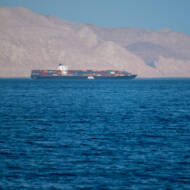
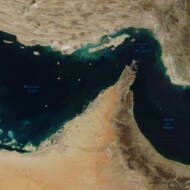
Iran’s government said on Saturday that it had reimposed 'strict control' over the Strait of Hormuz as gunboats of the Islamic Revolutionary Guard Corps fired on three commercial vessels.
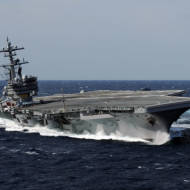
The pending arrival of roughly six more ships will bring to at least 27 the number of Navy vessels in the region—about 41% of all U.S. ships actively deployed worldwide
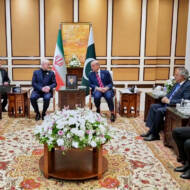
Regional mediators, including Pakistan, Egypt and Turkey, were pushing a 45-day ceasefire as part of a two-phase deal that could lead to a permanent end to the fighting.
An Iranian missile struck a residential building in Haifa, injuring several Israelis and trapping four others, whose bodies were recovered by rescue teams following an intense overnight search.
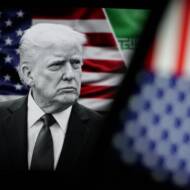
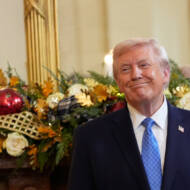
In an address to the nation on April 1, the president said that the U.S.-Israel military campaign against Iran could conclude within two to three weeks as the 'core strategic objectives' are near completion.
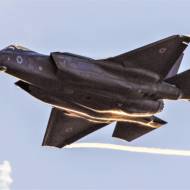
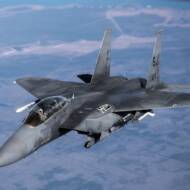
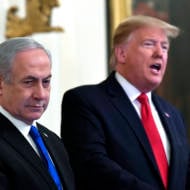
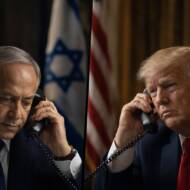
Prime Minister Benjamin Netanyahu saluted President Trump for the historic rescue operation that retrieved both crew members of an F-15E shot down by Iranian air defenses.
If this conflict accomplished nothing else, it has shown that Iran's ballistic missile program represents an existential danger to countries in both the Middle East and Europe.
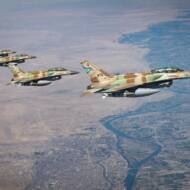
n Israeli Air Force lieutenant colonel invoked Parshat Zachor — the weekly Torah portion likening the Iranian regime to Israel's biblical enemy Amalek — and vowed total victory.
Hundreds of thousands of Iranians who fled the country following the Islamic Revolution in 1979 are sensing that this time, regime change is closer than ever amid joint military operations by Israel and the United States.
Something fundamental has changed. The aura of inevitability has been broken. The image of invulnerability has been shattered. Fear has begun to change sides.
“The strike on the headquarters is part of the current operational phase aimed at further degrading core Iranian terror regime systems and security capabilities.”
Mark Levin and Mark Dubowitz pushed back on claims that Israel dragged the U.S. into the war, arguing the conflict directly serves American national security interests.
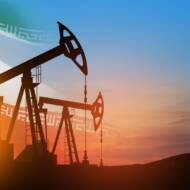
By keeping a narrow economic lifeline open—such as continued oil exports—Washington may be attempting to prevent further escalation while preserving incentives for restraint within Iran’s political system.
The strikes targeted infrastructure at a large-scale missile site used by the Iranian regime to prepare attacks against Israel and other countries in the region, the military said.
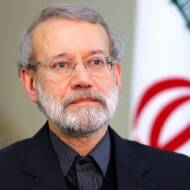
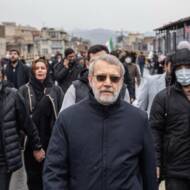
Instead of foregrounding Larijani’s role within a regime accused of violently suppressing protests, coverage leaned into biography. Scholar. Pragmatist. A man of ideas.
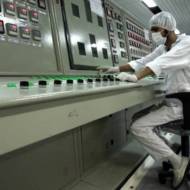
Larijani helped direct Iran’s regional strategy, including the use of proxies to attack Israel, the relentless pursuit of nuclear weapons, and the rejection of diplomatic efforts that would have halted that program.
Prime Minister Benjamin Netanyahu extended a heartfelt Happy Nowruz to the Iranian people, wishing them a year of freedom from the already-weakened tyrannical regime and expressing hope for a peaceful future.
Israeli soldiers, with music blaring in the background, watch as an Iranian missile flies overhead—moments before an Israeli interceptor destroys it midair, sparking cheers from the crowd.
Even as Iran’s ballistic missile barrages on Israel decline in volume, the regime’s rising use of cluster munitions is creating a new and escalating threat.
President Isaac Herzog visited United Hatzalah headquarters in Jerusalem, where emergency calls are handled, as the organization operates at full capacity during the war.