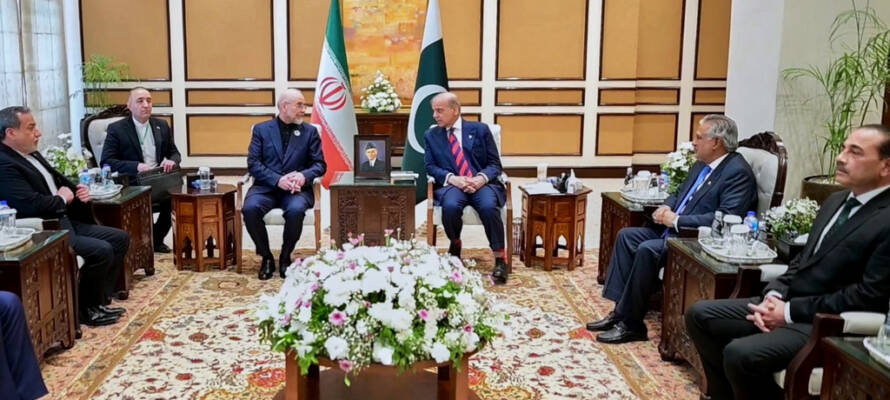

The delegation itself has become a visible expression of internal fragmentation.
By Mardo Soghom, Middle East Forum
The large size of Iran’s delegation to Pakistan for talks with Vice President JD Vance is remarkable not only for its scale, but also for what it may reveal about decision-making in Tehran.
The delegation includes more than seventy people, including some Tehran journalists and the security detail.
In addition to a core group of nine negotiators—primarily drawn from the foreign ministry and national security apparatus—the delegation includes twenty-six members of parliament accompanying Mohammad-Bagher Ghalibaf.
Such a mix of formal negotiators and political figures is atypical for high-stakes diplomacy, where delegations are usually tightly controlled and narrowly focused.
The official explanation about the parliamentarians in Tehran media—mostly hardliners—is that they would provide “advice,” considering the sensitive nature of the negotiations.
There were reports of two flights taking off from Iran to Pakistan on April 10, 2026, with flight identification numbers used for official delegations.
The contrast with previous Iranian negotiating efforts is striking. During the nuclear talks that led to the 2015 agreement, Iran’s delegation—headed by then-foreign minister Mohammad Javad Zarif—was relatively compact and technocratic, composed mainly of diplomats and nuclear experts.
Even when internal disagreements existed, Tehran managed them so as not to export them to the negotiating venue. The same was true about nuclear negotiations in 2021–2022, when Iran’s delegation remained compact and technocratic, led by senior foreign ministry officials and organized around specialized working groups.
There was no visible inclusion of large numbers of political figures or representatives of competing factions.
One interpretation is that this reflects a diffusion of authority within Iran’s political system, particularly in the wake of weakened central leadership after the targeted killing of Supreme Leader Ali Khamenei, Secretary of the Supreme National Security Council Ali Larijani and many military figures.
The presence of numerous parliamentarians—many of whom are not directly involved in foreign policy—may suggest that no single institution is empowered to negotiate on behalf of the state.
Instead, different factions appear at the table, or at least in proximity to it. The delegation itself has become a visible expression of internal fragmentation.
A second explanation is also possible. The size of the delegation may reflect bureaucratic looseness rather than deliberate design.
Ghalibaf, as speaker of parliament and a central political figure during the current crisis, may have accommodated a broad range of lawmakers seeking to be present at a pivotal moment.
In this scenario, the delegation is less a carefully calibrated instrument of statecraft than a product of internal dynamics—status-seeking, factional positioning, and the absence of strict gatekeeping.
A third interpretation points in the opposite direction: that the delegation is large by design. By bringing together representatives from across regime factions, Tehran may be attempting to project national consensus.
The presence of parliamentarians alongside official negotiators could signal that Ghalibaf is not acting alone but carries the backing of multiple constituencies within the system.
This would strengthen his position externally, suggesting that any commitments made to the talks would reflect broader institutional support.
Each of these explanations carries different implications. Fragmentation would raise doubts about the coherence and durability of any agreement. Ad hoc expansion would point to weaknesses in state discipline.
A deliberate show of unity, however, would suggest that Iran is seeking to negotiate from a position of collective legitimacy, under pressure.
What is clear is that the delegation’s size is not merely a logistical detail. In a political system where authority is opaque and layered, who shows up—and in what numbers—can reveal as much as what is said at the negotiating table.
Bring Joy to Israeli Soldiers - Send Chanukah Gifts!
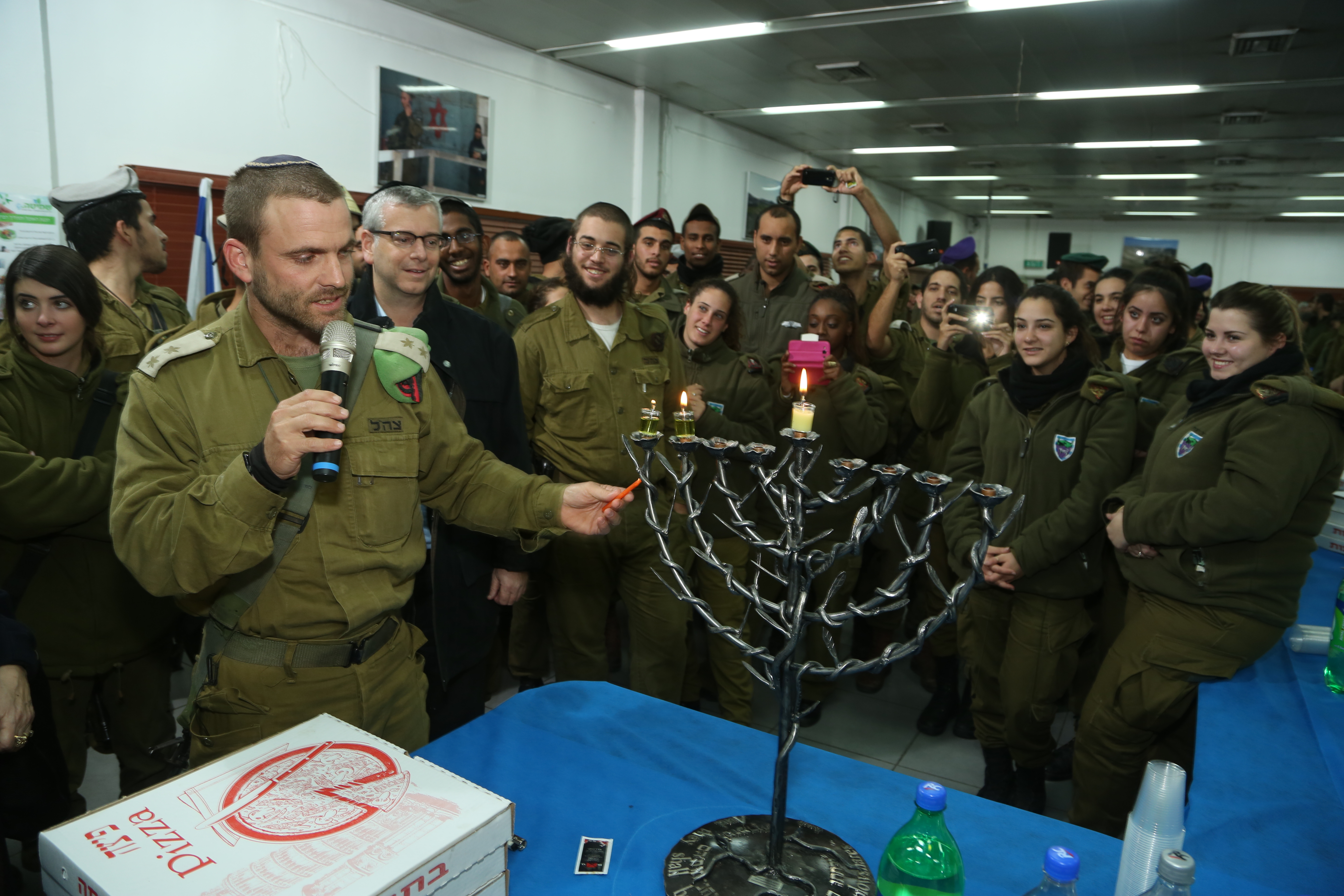
We are honored to thank the young men and women of the IDF who risk their lives every day to defend the citizens of Israel.
Join us in sending winter care packages and personal notes of support to Israeli soldiers who are out in the cold all day.
Warm up a soldier's heart with essential winter wear including fleece jackets, hats, gloves and more. Keep an entire unit warm!
THE SOLDIERS REALLY APPRECIATE YOUR LOVE AND CONCERN!
Click Here to Send Your Gift and Personal Note to Israeli Soldiers
