Rather than consistently rewarding meaningful contributions to peace, the prize has served as a platform for globalist ideology involving the inversion of right and wrong.
When the world's media depend on local sources to tell the story of a war, those sources must be subjected to the same scrutiny as sources anywhere else.
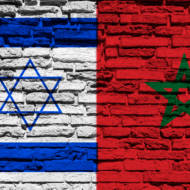
According to Business Insider, Israel is now Morocco’s second-largest arms supplier, accounting for 24% of Moroccan arms imports behind the United States at 60% and ahead of France at 10%.
According to assessments in Israel in recent months, Operation Roaring Lion/Epic Fury, which began on Feb. 28, massively degraded Iranian missile production industries.
Now Netanyahu will answer an impossible demand—the demand that Jews justify their very existence and their determination to resist a continuing threat.
Foreign lifelines allow Tehran to preserve its core technical capabilities, cushion its economic decline and systematically replace destroyed military hardware over time.
Non-Jews like Macklemore and many others much more influential than him have had the chutzpah to tell Jews that they must deny an essential element of their identity and faith.
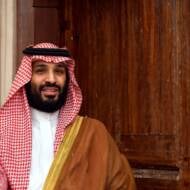
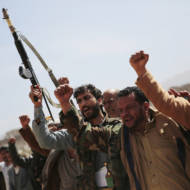
Saudi Crown Prince Mohammed bin Salman has appealed for help across the region, including an indirect approach to Israel via U.S. Central Command, asking for intelligence and other assistance to fight the Houthis.
Ali al-Taher Ridge sits roughly 15 kilometers (9.3 miles) from the Israeli border, meaning that control over it 'grants a significant advantage for observation and fire control in the Southern Lebanon area.'
Expelling Jews from Judea and Samaria would risk producing the same disastrous result as Israel’s 2005 withdrawal from the Gaza Strip—the creation of the conditions that eventually produced Yahya Sinwar and Oct. 7.
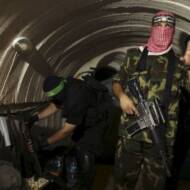
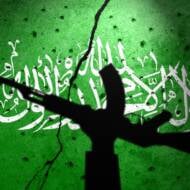
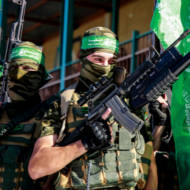
Hamas's attacks on the Board of Peace signal not a routine diplomatic disagreement but a warning that the group has no intention of quietly disappearing from Gaza's political or military landscape.
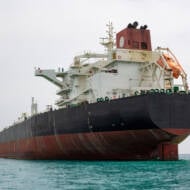
The United States should deny blacklisted tankers coverage and credit unless they clear an independent audit, and those financing them should face more severe secondary sanctions.
IRGC-linked networks have exploited open borders, civil liberties, and gaps in counter-terrorism coordination to establish operational cells across the continent.
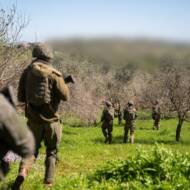
Before any entry into a structure, forces observe the building, fire on it with a tank, use shoulder-fired missiles against it and scan the interior with drones.
Egypt has intensified meetings with Palestinian factions in preparation for an extended dialogue and seeking understandings that could lead to a unified Palestinian Authority and elections.
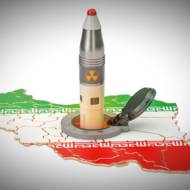
A regime whose voices openly discuss building and 'firing' nuclear weapons, with scenarios of tsunamis against America, cannot be trusted with such capability.
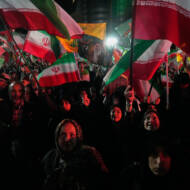
The comprehensive U.S. economic pressure point campaign targeting Iran’s already troubled economy could have dramatic effects on the restive population in the country of over 90 million people.
The danger is that the proposed alliance could perform well enough in the upcoming elections to become a dominant force in the next Palestinian Legislative Council.
U.S. foreign policy shifts from a proactive, long-term chess game to a reactive, short-term damage control exercise dictated by whatever event is dominating the digital news cycle.
The mainstream media outlet began promoting variations of genocide libel on Oct. 14, 2023, just one week after the worst antisemitic atrocity since the Holocaust.
For the remaining time of Trump's presidency, the regime plans to play a familiar game of opening and closing the waterway, dangling intermittent negotiations, employing intermediaries, walking up to the table and then walking away.
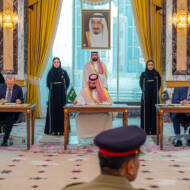
The Mecca Joint Defense Agreement was formally signed on Aug. 7, 2026, by Saudi Crown Prince Mohammed bin Salman, Turkish President Recep Tayyip Erdoğan and Pakistani Prime Minister Shehbaz Sharif.