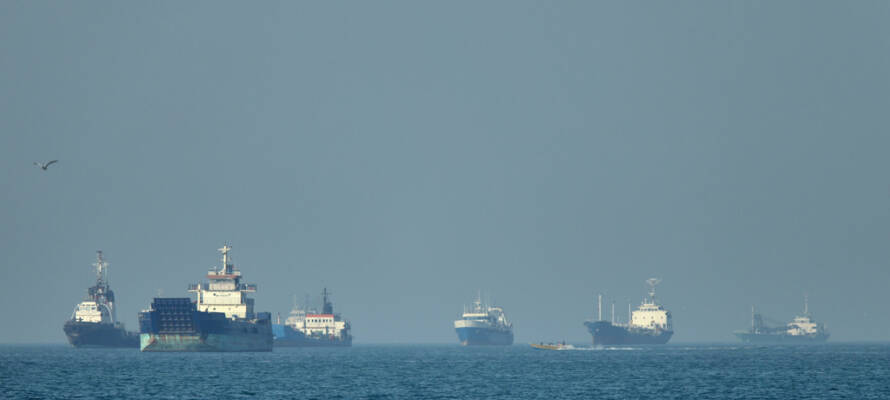
Trump previously warned that negotiations over the MoU would stop if Tehran sought payment from commercial shipping.
By Shula Rosen
Iran said it plans to begin charging service fees for ships passing through the Strait of Hormuz, describing the payments as compensation for maritime services rather than transit tolls, even as President Donald Trump has warned that imposing charges on commercial shipping would end negotiations over a memorandum of understanding (MoU) aimed at ending the conflict.
The announcement was made Saturday by Ambassador Abdolreza Rahmani Fazli during the World Peace Forum in Beijing.
Fazli said Tehran and Oman are working in “collaboration and cooperation” on “new arrangements” for the strategic waterway, adding that “friendly countries” would receive “special considerations” when sending vessels through the strait.
Explaining the policy, Fazli said Iran considers the Strait of Hormuz part of its territorial waters and therefore intends to collect fees tied to services provided there.
“As a country where the Hormuz is part of its territorial waters, we will definitely charge service fees,” Fazli said.
He rejected the suggestion that the payments should be viewed as tolls, saying the new framework is intended to regulate maritime operations.
“These new arrangements will be concerning guaranteeing the security of passage through the Strait of Hormuz, supervision of the passage of the vessels … and also guaranteeing and dealing with the environmental consequences of the massive number of ships,” he said, according to AFP.
Trump has repeatedly said Iran should not impose charges on vessels using the waterway.
He previously warned that negotiations over the MoU would stop if Tehran sought payment from commercial shipping.
Last month, the president wrote on Truth Social that Iran had informed the United States it would not pursue such charges.
“Iran has informed the US that, despite troublemaking Fake News reporting to the contrary, there are ‘NO TOLLS, NO INSURANCE COSTS, & NO OTHER CHARGES OF ANY KIND BEING SOUGHT OR RECEIVED BY IRAN ON SHIPS TRAVELING THE STRAIT OF HORMUZ,” President Trump wrote.
The initial MoU signed by Iran and the United States allows commercial vessels to transit the Strait of Hormuz without charge for 60 days. It does not address what arrangements would apply after that period expires.
Roughly 20% of the world’s oil and gas supply moves through the Strait of Hormuz during peacetime. Shipping through the waterway was disrupted during the conflict involving the United States, Iran, and Israel, contributing to a sharp rise in oil prices.