“Iran made a poor choice. Now they pay,” Hegseth wrote.
By United with Israel Staff
The United States launched its third round of strikes against Iran in less than a week on Saturday night after the Islamic Revolutionary Guard Corps attacked another commercial vessel transiting the Strait of Hormuz.
According to U.S. Central Command, American forces began the operation after the IRGC attacked the M/V GFS Galaxy, a Cyprus-flagged container ship, leaving one civilian crew member missing and causing an onboard fire and significant engine room damage that left the vessel unable to continue its journey.
CENTCOM said Iran had once again failed to abide by the Memorandum of Understanding intended to restore freedom of navigation through the strategic waterway.
“Iran was provided yet another opportunity to demonstrate adherence to the Memorandum of Understanding after being held accountable for earlier attacks on commercial vessels but has again failed,” CENTCOM said.
As the strikes began, U.S. Defense Secretary Pete Hegseth issued a blunt warning to Tehran.
“Iran made a poor choice. Now they pay,” Hegseth wrote.
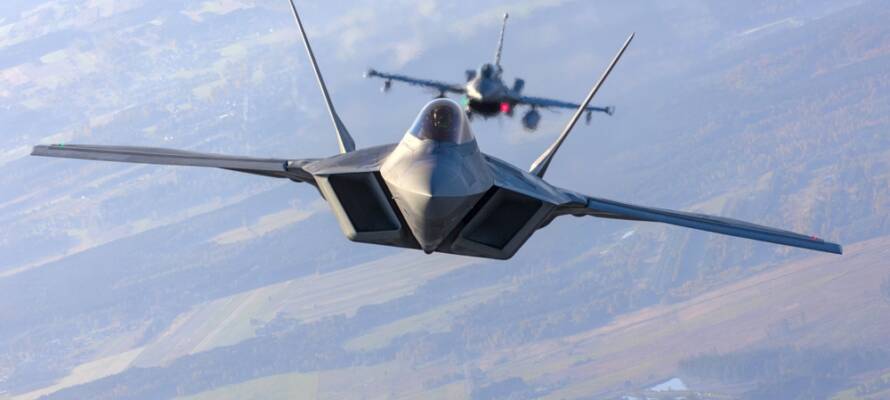
Late Saturday night, CENTCOM announced that the operation had concluded after U.S. forces struck approximately 140 Iranian military targets using precision munitions launched by land- and sea-based fighter aircraft, drones and naval vessels.
The targets included missile and drone sites, naval capabilities, ammunition storage facilities, communications networks and coastal surveillance positions.
The latest operation brought the total number of Iranian military targets struck by U.S. forces over three nights to more than 300, according to CENTCOM.
The strikes followed a series of increasingly aggressive Iranian actions earlier Saturday. The IRGC Navy declared the Strait of Hormuz closed to all vessels until further notice and until the end of what it called “American interference.” It also announced that it had stopped one vessel with warning shots and targeted a second ship in the strait.
Since early May, CENTCOM said U.S. forces have helped facilitate the passage of more than 800 commercial vessels carrying approximately 400 million barrels of crude oil through the Strait of Hormuz.
India’s Ministry of External Affairs said one Indian national remained missing following the attack on the GFS Galaxy, while 10 other Indian crew members were rescued.
Iranian Parliament Speaker Mohammad Bagher Ghalibaf accused Washington of violating the agreement intended to end the fighting.
“The era of one-sided deals is over,” Ghalibaf wrote on X. “We told you: Keep your word or pay the price. Reality is knocking.”
Iran responded to the latest U.S. strikes with another wave of attacks against American military facilities across the Gulf.
Iranian state media reported that the IRGC launched ballistic missiles at Al Udeid Air Base in Qatar and carried out what it described as a heavy attack on logistics and refueling facilities used by U.S. naval and air forces at the Port of Duqm in Oman.
Iran also claimed to have targeted U.S. military assets in Kuwait and Bahrain, including a Patriot air defense system, communications infrastructure and radar installations. Qatar and Kuwait reported intercepting incoming aerial threats, while sirens sounded in Bahrain and residents were told to seek shelter.
In Jordan, the IRGC claimed it struck military infrastructure, including drone storage hangars at Prince Hassan Air Base.
The latest exchange marked another major escalation in the confrontation between Washington and Tehran, with both sides continuing to trade strikes as commercial shipping through the Strait of Hormuz remained under threat.