Iran has not abandoned its enrichment ambitions, while significant questions remain about its underground infrastructure and stockpiles of enriched uranium.
By United with Israel Staff
New satellite imagery has detected activity at several of Iran’s key nuclear sites, prompting renewed concerns that Tehran could be positioning itself to revive elements of its nuclear program despite the extensive damage inflicted by U.S. and Israeli strikes earlier this year.
The findings come from the Institute for Science and International Security, a Washington-based nonprofit led by former International Atomic Energy Agency inspector David Albright that specializes in analyzing nuclear proliferation through technical intelligence and satellite imagery.
After reviewing imagery from Natanz, Fordo, Isfahan, Pickaxe Mountain, and other nuclear-related facilities, the institute concluded there is no evidence that Iran has resumed uranium enrichment and that its centrifuge production program remains destroyed.
At the same time, it warned that Iran has not abandoned its enrichment ambitions, while significant questions remain about its underground infrastructure and stockpiles of enriched uranium.
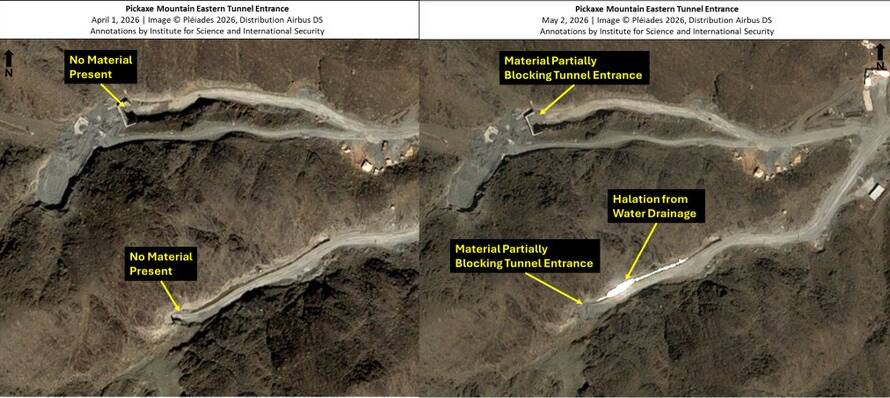
The report highlights ongoing vehicle activity and construction work at the underground Pickaxe Mountain tunnel complex south of Natanz, where roads leading to open tunnel portals show signs of continued use.
Recent satellite imagery from late June 2026, of the Natanz Nuclear Complex and the nearby Pickaxe Mountain facility, Fordo, and Esfahan, were provided to the Institute by @vantortech.
At Natanz, little activity can be seen. The access points to the below ground enrichment… pic.twitter.com/on6isIGhNA
— Inst for Science (@TheGoodISIS) July 2, 2026
While the institute does not believe the facility is currently capable of operating or storing enriched uranium, it said continued construction at the site raises concerns because the U.S.-Iran memorandum of understanding requires Iran to maintain the status quo at nuclear-related facilities.
Elsewhere, satellite imagery showed that the tunnel entrances at Natanz, Fordo, and Isfahan remain sealed or backfilled following the strikes, effectively trapping what the institute believes are Iran’s remaining stocks of enriched uranium, including roughly 440 kilograms of uranium enriched to 60 percent purity.
The report also assesses that underground facilities at Natanz may still contain intact centrifuges, components, and other equipment, although the site remains inaccessible because its entrances were destroyed.
Above ground, the damage appears extensive. The institute found no evidence that Iran has begun rebuilding destroyed centrifuge production facilities, while Natanz’s underground enrichment halls remain inaccessible and critical infrastructure, including power systems and cooling equipment, has not been restored.
The report nevertheless warns that unanswered questions remain regarding the location of Iran’s enriched uranium, surviving nuclear equipment, and the status of facilities that could potentially be repurposed for future enrichment. It also notes unusually high activity around Fordo’s support complex, although its significance remains unclear.
Because Iran continues to deny inspectors full access to its nuclear sites and has not provided required information about its enriched uranium inventory or centrifuge equipment, the institute urged the International Atomic Energy Agency to release more detailed assessments based on satellite imagery and to intensify monitoring of any efforts to recover nuclear material or rebuild sensitive facilities.
While concluding that Iran’s enrichment program remains effectively disabled for now, the institute stressed that the remaining infrastructure, underground facilities, and stockpiles of enriched uranium continue to pose a proliferation risk and require verifiable dismantlement or further disabling to prevent the program from being reconstituted.