The announcement sheds new light on the scale of Hezbollah’s military infrastructure at Ali al-Taher and underscores Iran’s role in developing the strategic position.
By United with Israel Staff
Iran warned the United States that it would respond forcefully if Israel launched a major offensive against a strategic Hezbollah stronghold in southern Lebanon, but hours later the IDF announced that it had completed clearing the terror group’s sprawling underground infrastructure in the area.
The IDF said Thursday that its forces had cleared Hezbollah’s underground network in the Ali al-Taher Ridge area and were continuing operations to neutralize the infrastructure.
The announcement came after Reuters reported earlier Thursday that Tehran had warned Washington against a major Israeli assault on the ridge, where Iranian military personnel were reportedly holed up alongside Hezbollah terrorists.
According to the IDF, Hezbollah terrorists who had been operating inside the underground complex and carrying out attacks against Israel and Israeli troops were either eliminated or fled the area during the operation.
The military described the complex as a strategic underground network constructed over approximately two decades with funding and planning from the Iranian regime.
The sprawling infrastructure included command centers, weapons stockpiles, living quarters and other facilities designed to support Hezbollah’s military operations.
Operations to fully neutralize the underground sites remained underway Thursday. The IDF said that once the mission is completed, it will adjust its defensive posture in the area based on an updated situational assessment.
The announcement sheds new light on the scale of Hezbollah’s military infrastructure at Ali al-Taher and underscores Iran’s role in developing the strategic position.
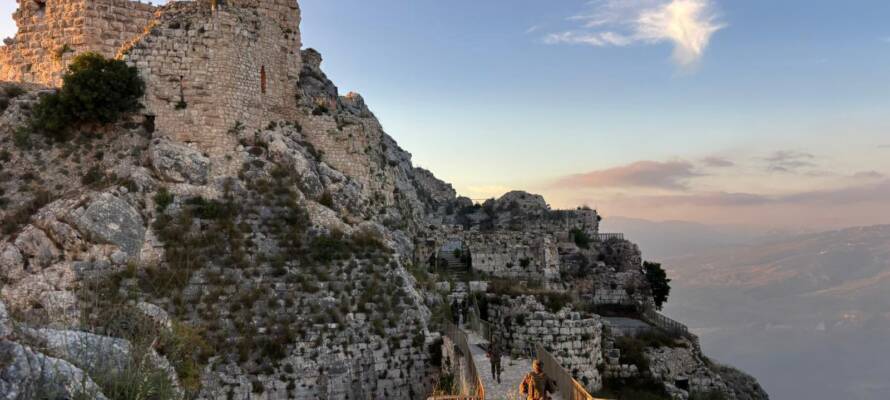
The ridge, which overlooks large swaths of southeastern Lebanon, has emerged as one of the most fiercely contested positions in the ongoing Israel-Hezbollah conflict.
Lebanese security sources previously told Reuters that Hezbollah had constructed an underground command center and weapons depots within the ridge. Hezbollah publicly declared that it controlled the area and vowed to confront any Israeli attempt to advance there.
Two regional officials briefed by Tehran told Reuters that Iran conveyed its warning to Washington through Oman, which has served as an intermediary between the United States and the Islamic Republic.
According to the officials, more than a dozen members of Iran’s Islamic Revolutionary Guard Corps, including at least two senior officers, were alongside Hezbollah terrorists in the area.
A third foreign official with direct knowledge of the Iranian message said it was delivered around mid-August and claimed that U.S. pressure subsequently prompted Israel to postpone an operation to storm Ali al-Taher.
The White House denied that Washington had pressured Israel to refrain from attacking the ridge.
The Israeli military has also reportedly disputed claims that Iranian personnel were present there.
Maariv, citing an Israeli military source, reported Thursday that the IDF assessed there were no IRGC personnel at Ali al-Taher. Channel 12 similarly reported that the military was unaware of Iranian forces operating there.
The IDF’s latest announcement did not say that Iranian personnel had been found inside the underground complex, but explicitly said Iran had funded and helped plan its construction.
Questions had previously emerged over the fate of Hezbollah terrorists trapped within the ridge’s extensive underground infrastructure.
An Israeli military official told Reuters in June that Hezbollah fighters were trapped underground without food or water. Maariv reported Thursday that the IDF assessed some had died after being stranded without supplies.
Channel 12 also reported that Israeli forces had inflicted significant damage on the underground network, destroying entire sections of the infrastructure. Some Hezbollah terrorists were reportedly killed as the underground compounds were destroyed, while others escaped during the fighting.
The IDF’s Thursday announcement now confirms that the clearing phase has been completed, with the terrorists who remained inside either killed or driven from the area, while work to neutralize the infrastructure itself continues.
Hezbollah had warned that a broad Israeli assault on Ali al-Taher would mark the end of the ceasefire, trigger a return to full-scale war and lead to renewed missile attacks against communities in northern Israel.
The terror group said that an Iranian warning to Washington would be a “natural conclusion” given the situation.
The developments underscore the extent to which Ali al-Taher had become a major Hezbollah military position built with Iranian backing over the course of two decades.
Despite threats from both Tehran and Hezbollah of a major escalation, Israeli forces have now cleared the strategic underground network and are continuing efforts to render it unusable.