When the world's media depend on local sources to tell the story of a war, those sources must be subjected to the same scrutiny as sources anywhere else.
Egypt has intensified meetings with Palestinian factions in preparation for an extended dialogue and seeking understandings that could lead to a unified Palestinian Authority and elections.
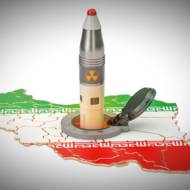
A regime whose voices openly discuss building and 'firing' nuclear weapons, with scenarios of tsunamis against America, cannot be trusted with such capability.
The danger is that the proposed alliance could perform well enough in the upcoming elections to become a dominant force in the next Palestinian Legislative Council.
For the remaining time of Trump's presidency, the regime plans to play a familiar game of opening and closing the waterway, dangling intermittent negotiations, employing intermediaries, walking up to the table and then walking away.
How can anyone be expected to trust these countries when their governments participate in meetings and statements that condemn Israel while failing to demand that Hamas disarm unconditionally?
The assumption that the National Committee for the Administration of Gaza or ISF would be able to prevent terrorists from regaining control over the stored weapons is totally misleading.
Political upheaval, or even a violent overthrow of the monarchy, could one day place uranium enrichment facilities, nuclear scientists, and weapons-grade materials into the hands of Islamist terrorists.
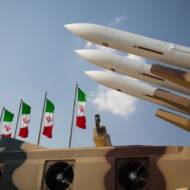
Iran's pattern is clear: escalate, absorb strikes, then call for talks by mediators from Qatar, Oman, Pakistan, or other Muslim Brotherhood allies that are trying to buy Iran time.
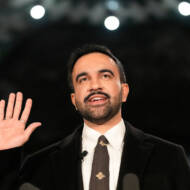
If Mamdani were to publish a map of neighborhoods 'from the river to the sea' and associated ethnicities, he would no doubt replicate the methodology he applied to his New York City map.
The United Nations was founded to make atrocities costly for those who commit or enable them but instead built a machine that absorbs those costs internally.
A dictatorial regime that publicly tolerates calls for the assassination of the president of the United States cannot be treated as just another difficult adversary.
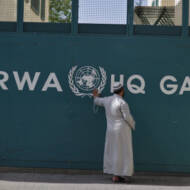
For Palestinians, UNRWA has become the international symbol of their demand that the remaining Palestinian refugees of 1948 and millions of their descendants be allowed to settle inside Israel.
Officials from the United Arab Emirates, Bahrain, and Kuwait reportedly resent being sidelined during the negotiations and complain that they were largely excluded from discussions that directly affect their security.
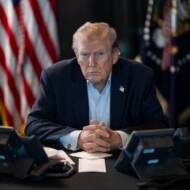
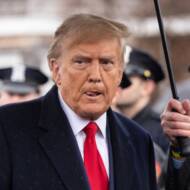
Trump prefers an agreement to another prolonged war, but he also understands that an agreement reached through weakness can produce an even greater conflict.
The truce touted by Trump will not end any of those wars, none of which is likely to end unless Iran breaks with Khomeinism and chooses another trajectory.
Do not listen to the liberal media outlets that are telling you to stop, de-escalate, or accept 20-year fake 'moratoriums' or other idiotic half-measures.
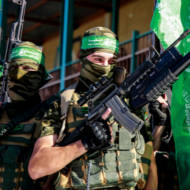
The message, along with other documents seized by the IDF over the past two years, exposes extensive strategic coordination between Hamas, Hezbollah, and Iran.
The brave Iranian people represent millions of 'boots on the ground'—if only they would have the means to defend themselves to shift the balance of power.
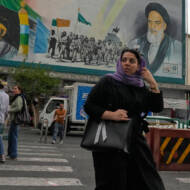
Critics often frame Iranian politics as a struggle between moderates and hardliners, but this distinction has repeatedly proven disastrously misleading.
By criminalizing people-to-people engagement, Arab and Muslim leaders and institutions send a powerful message to their populations: Peace with Israel is not merely undesirable but a crime.
For the Iranian regime and its proxies, survival equals victory. If they are not destroyed, if they retain their weapons, if they remain in power, they can claim success.