U.S. foreign policy shifts from a proactive, long-term chess game to a reactive, short-term damage control exercise dictated by whatever event is dominating the digital news cycle.
A dictatorial regime that publicly tolerates calls for the assassination of the president of the United States cannot be treated as just another difficult adversary.
Officials from the United Arab Emirates, Bahrain, and Kuwait reportedly resent being sidelined during the negotiations and complain that they were largely excluded from discussions that directly affect their security.
The regime must feel it has learned a powerful lesson: It can engage in provocative actions, extract concessions through pressure, get away with violations, and still remain firmly in power.
IRGC members are trained to see the world through the lens of resistance, martyrdom, anti-Americanism, antisemitism, and blind loyalty to the supreme leader.
The American goal in Middle Eastern conflicts usually is for its allies—including Israel—to successfully defend themselves and then to reestablish peace in the region as quickly as possible.
The truce touted by Trump will not end any of those wars, none of which is likely to end unless Iran breaks with Khomeinism and chooses another trajectory.
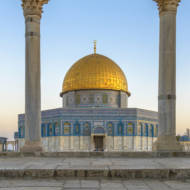
Under the longstanding status quo, the Jordanian Waqf administers the Temple Mount’s internal religious affairs, while Israel controls access and external security.
The brave Iranian people represent millions of 'boots on the ground'—if only they would have the means to defend themselves to shift the balance of power.
Critics often frame Iranian politics as a struggle between moderates and hardliners, but this distinction has repeatedly proven disastrously misleading.
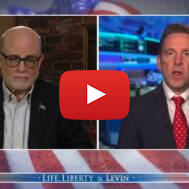
Mark Levin and Mark Dubowitz pushed back on claims that Israel dragged the U.S. into the war, arguing the conflict directly serves American national security interests.
Tehran has carefully weighed the risk of a U.S. military strike against Trump’s demands and concluded that it cannot afford to give up its missile arsenal or its capacity for regional disruption.
Iran identifies countries where enforcement is weak, political cover is available, or financial systems can be exploited, then proceeds to build layers of infrastructure there.
Saudi Arabia's renewed anti-Israel and antisemitic rhetoric shows that the kingdom is moving away from normalization with Israel in favor of an alliance with the Muslim Brotherhood, Qatar and Turkey.
After eight consecutive days of nationwide protests in Iran, President Trump vowed to protect demonstrators from the oppressive regime, marking a significant step in supporting innocent citizens as they seek to reclaim their country.
Northwestern struggled to correct an impression that it had coddled pro-Hamas protesters and acceded to their demands for a boycott of Israel in exchange for an end to their May 2024 encampment.
According to the advisers, the administration is also discussing with Israel the possibility of providing a sanctuary in IDF-controlled areas to Palestinians who feel threatened by Hamas.
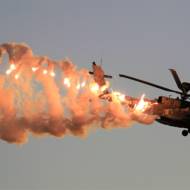
The planned package includes a deal worth $3.8 billion for 30 AH-64 Apache attack helicopters and $1.9 billion for 3,250 infantry assault vehicles for the Israeli army.
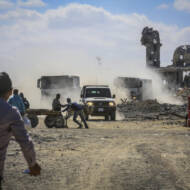
The White House and State Department did not immediately respond to a request for comment, but the plan to rebuild Gaza appears to fall in line with previous comments made by Trump.