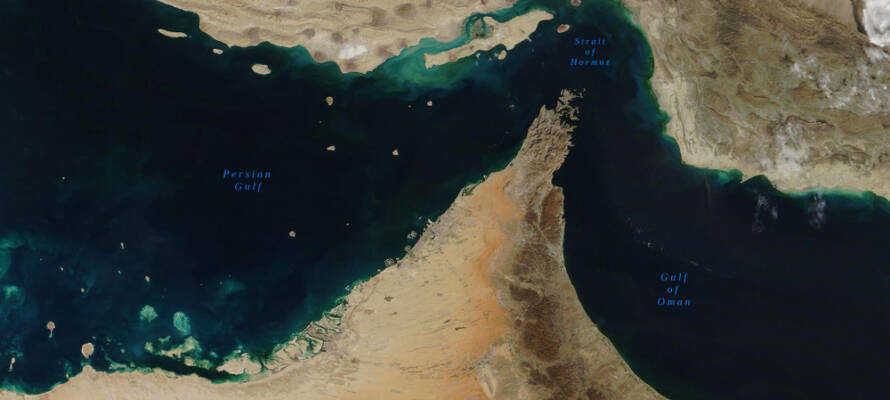
Tehran rejected the latest U.S. proposal to reopen the Strait of Hormuz, insisting the strategic waterway will remain closed until the war ends completely.
By United with Israel Staff
Despite U.S. President Donald Trump’s announcement that renewed nuclear talks with Iran would begin Monday afternoon, Iranian officials have publicly denied that any negotiations with Washington are currently scheduled, deepening uncertainty over the diplomatic push that prompted Trump to call off a major military strike over the weekend.
According to Turkey’s Anadolu Agency, citing sources in Pakistan’s government, no official date has been set for the resumption of negotiations between Washington and Tehran, casting doubt on Trump’s timeline.
Adding to the confusion, Iranian Foreign Ministry spokesman Esmail Baghaei said Monday that “there are no negotiations with the United States,” insisting the only ongoing discussions involve Oman and relate solely to safe passage through the Strait of Hormuz.
A further setback emerged Monday when an Iranian source told Lebanon’s Al Mayadeen that Tehran had rejected the latest U.S. proposal to reopen the Strait of Hormuz, insisting the strategic waterway would remain closed until the war ends completely.
The conflicting messages come less than 24 hours after Trump announced that negotiations with Iran would resume Monday afternoon following his decision to cancel what he described as a massive U.S. military operation.
Speaking to reporters aboard Air Force One on Sunday, Trump said Saudi Arabia, the United Arab Emirates, and Qatar had urged him to delay the attack because they believed an agreement with Tehran was within reach. He also claimed Iran had joined the request for more time.
“The deal is imminent, having to do with the Hormuz Strait, and also, ultimately, the denuclearization of Iran,” Trump said.
The president did not identify where the negotiations would take place, who would participate, or whether they would be held directly or through regional mediators. He also declined to set a deadline for reaching an agreement.
Trump revealed that the United States had been preparing what he described as “the biggest attack since World War II,” saying the military was “all set to go” before he decided to call off the operation to give diplomacy another opportunity.
The announcement capped a tense second consecutive weekend during which Israel, the broader Middle East, and much of the international community braced for a dramatic escalation. U.S. embassies across the region warned Americans to remain vigilant, while reports indicated Washington and Jerusalem had coordinated plans for a large-scale strike campaign targeting Iran’s energy infrastructure. Iran, meanwhile, warned it would retaliate against any American or Israeli attack by targeting critical energy facilities throughout the region.
Trump ultimately halted the planned strikes Saturday night, saying Iran and several regional countries had requested additional time to finalize what he described as the outlines of a broader agreement that would reopen the Strait of Hormuz and address Tehran’s nuclear program.
Monday’s statements from Tehran, however, paint a markedly different picture, with Iranian officials denying that direct negotiations are underway and signaling continued opposition to reopening the strategically vital waterway, underscoring the significant gaps that remain between the two sides despite Trump’s optimism.
Do You Love Israel? Make a Donation - Show Your Support!

Donate to vital charities that help protect Israeli citizens and inspire millions around the world to support Israel too!
Now more than ever, Israel needs your help to fight and win the war -- including on the battlefield of public opinion.
Antisemitism, anti-Israel bias and boycotts are out of control. Israel's enemies are inciting terror and violence against innocent Israelis and Jews around the world. Help us fight back!